Walla, Walla, WA | 509-529-7537
509-529-7537
The Bottle Color Question: Clear vs. Dark Glass Explained
When it comes to olive oil, what’s inside the bottle gets all the attention; the aroma, the flavor, the origin, the pressing date. But there’s another detail that quietly determines how long that quality lasts: the color of the bottle itself. Clear or dark? Transparent or tinted? It may seem like a design choice, but the glass you pour from is more than packaging. It’s a barrier; or sometimes, a gateway; between your oil and its biggest enemies: light, heat, and air.
Why Bottle Color Matters
To understand why the bottle matters, it helps to remember that olive oil is not an inert product. It’s alive with natural compounds; antioxidants, chlorophyll, and polyphenols; that give it flavor and health benefits but also make it sensitive to its environment. As soon as the oil leaves the press, it begins a slow process of transformation. The goal of proper storage and packaging is to slow that process as much as possible. The color and opacity of the glass play a crucial role in this preservation.
The Appeal and Drawback of Clear Glass
Clear glass bottles, with their clean and transparent look, are visually appealing. They allow customers to admire the oil’s golden or green hues and convey a sense of purity and freshness. In retail settings, this transparency can make a product more enticing; especially when the oil glows under bright store lights. However, the same visibility that enhances presentation also exposes the oil to ultraviolet (UV) rays and visible light, both of which accelerate oxidation. Light energy interacts with chlorophyll in the oil, producing free radicals that begin breaking down the delicate fatty acids and aromatic compounds. Within weeks of exposure, this process can dull the flavor, flatten the aroma, and reduce the oil’s antioxidant content.
How Dark Glass Protects Your Oil
Dark glass; typically green, brown, or amber; serves as a protective filter. It blocks most UV radiation and significantly reduces the amount of visible light that penetrates the bottle. This protection helps the oil retain its original qualities for a longer period. Studies have shown that oils stored in dark glass remain stable for months longer than those kept in clear bottles under identical conditions. The difference becomes even more pronounced when the bottles are displayed under direct lighting or stored in a sunny kitchen. In such settings, the degradation of oil in clear bottles can be several times faster.
The Science Behind Light Protection
The scientific explanation is simple but powerful. Oxidation, the process that leads to rancidity, requires three main accelerants: oxygen, heat, and light. While air and temperature can be controlled by sealing the bottle properly and storing it in a cool place, light exposure is determined primarily by the color and thickness of the glass. Darker bottles, particularly those in deep green or amber tones, absorb or deflect light before it reaches the oil. Clear glass, by contrast, allows full-spectrum light to pass through, effectively acting like a magnifying glass that intensifies degradation when the oil is displayed on open shelves or near windows.
For this reason, most high-quality olive oil producers choose dark glass bottles or opaque metal tins. These options not only preserve freshness but also signal to informed consumers that the brand prioritizes quality over shelf appeal. Some producers who prefer clear glass for aesthetic reasons compensate by packaging their bottles in protective boxes or wrapping them in foil, allowing buyers to enjoy the beauty of the oil at home without exposing it to excessive light during transport or display.
Not All Dark Glass Is Equal
It’s worth noting that not all dark glass offers equal protection. The effectiveness depends on both color and density. Amber glass filters out more light than green glass, while black or very dark brown provides near-total protection. However, extremely opaque bottles can make it difficult for customers to gauge how much oil remains, which is why most manufacturers choose deep green as a balance between practicality and preservation.
The Retail Environment Factor
Another factor often overlooked is the lighting environment of where the oil is stored or sold. In a dimly lit pantry or wine cellar, the risk from light exposure is minimal, even with clear glass. But in grocery stores, where oils often sit under strong fluorescent or LED lighting for months, clear bottles can experience rapid quality decline. Many oils that appear fresh on the shelf may already have lost much of their flavor by the time they reach the kitchen, simply because their packaging couldn’t defend against continuous illumination.
The D’Olivo Difference
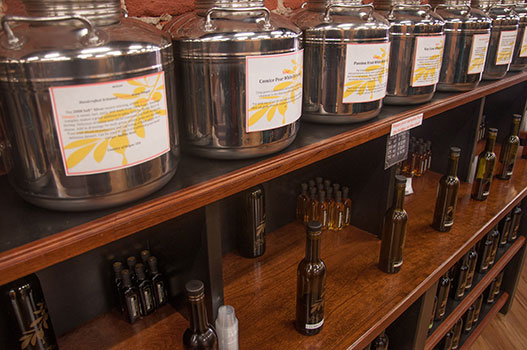
At D’Olivo we understand the importance of keeping oils as fresh as possible and because of this we store our oils in large, stainless steal fustis. When it’s time, oils are the bottled into dark green bottles and sealed in-store. This ensures that our customers are getting the freshest oils, bottled properly and ready to be used in the kitchen.
Transparency vs. Protection
The debate between clear and dark glass also touches on consumer psychology. Transparency suggests honesty; the idea that nothing is hidden, that what you see is what you get. For new or boutique brands, this visual openness can attract customers. Yet, ironically, the very transparency meant to showcase authenticity can end up damaging the product’s integrity. Premium producers increasingly educate buyers on this paradox, explaining that dark glass doesn’t conceal the oil; it protects it. True transparency, in this case, lies in the brand’s willingness to preserve quality rather than merely display beauty.
Environmental and Innovation Considerations
From an environmental standpoint, both clear and dark glass are recyclable, but darker shades tend to be reused more effectively in the olive oil industry because they’re standard for preserving freshness. Some modern brands are experimenting with UV-coated clear glass that maintains visibility while blocking harmful wavelengths, merging design with science. However, these coatings add cost and are still less protective than fully tinted glass. As the industry evolves, packaging innovation continues to explore how to combine sustainability, aesthetics, and functionality; but for now, darker glass remains the gold standard for oil longevity.
What This Means for Consumers
For consumers, the takeaway is straightforward but often overlooked. The bottle color is not a trivial detail; it’s a signal of how seriously the producer takes preservation. If you buy oil in a clear bottle, treat it as you would fresh produce: use it quickly, store it in a dark cabinet, and avoid leaving it on the counter. For dark glass bottles, the rules still apply; keep them cool, sealed, and away from sunlight; but you’ll have a longer window to enjoy the oil at its peak.
The Final Word
Ultimately, the question of clear versus dark glass isn’t just about preference or branding; it’s about chemistry. Light is energy, and energy changes everything it touches. In the world of olive oil, those changes can mean the difference between vibrant, aromatic notes and a dull, lifeless taste. A dark bottle guards against that transformation, preserving the subtleties that define true extra virgin quality; the fruitiness, the slight bitterness, the peppery finish.
So the next time you reach for a bottle of olive oil, take a closer look at its color. Behind that simple shade of green or amber lies a world of science and craftsmanship, all aimed at ensuring that what you pour over your food is as fresh, flavorful, and healthful as the day it was made. The glass, after all, is not just packaging; it’s protection.
INFORMATION
Subscribe to D'Olivo via Email
Stay up to date! Sign up to receive D'Olivo emails
© D'Olivo
Accepted Forms of Payment