Walla, Walla, WA | 509-529-7537
509-529-7537
Bread and Beyond: Creative Uses for Sourdough Starter
Here’s what nobody tells you when you start a sourdough starter: the bread is almost beside the point.
Yes, a good sourdough loaf is worth the effort. That crackling crust, the open crumb, the tang that commercial bread can’t replicate. But once you’ve got an active starter going, you’ll realize pretty quickly that you’re producing more of this stuff than any reasonable bread-baking schedule can handle. You feed it, it grows, you use some, you feed it again. The math doesn’t work unless you’re baking every single day or throwing half of it away each time.
The discard problem is real. And the solution isn’t to toss it—it’s to start thinking of your sourdough starter as an ingredient, not just a bread-making tool.
The Breakfast Situation
Sourdough pancakes might be the best argument for keeping a starter alive. The discard you’d normally throw out makes pancakes that are lighter, tangier, and more interesting than anything from a box mix. The fermentation does some of the work overnight, developing flavor and air bubbles while you sleep.
Overnight Sourdough Pancakes
(Makes about 12 pancakes)
The night before:
1 cup sourdough discard
1 cup all-purpose flour
1 cup milk
1 tablespoon sugar
Whisk everything together in a large bowl. Cover loosely and leave on the counter overnight (8-12 hours). In the morning, add:
1 egg
2 tablespoons melted butter
½ teaspoon salt
1 teaspoon baking soda
Stir until just combined—don’t overmix. The batter will be bubbly and slightly thick. Cook on a buttered griddle over medium heat until bubbles form on the surface and the edges look set, then flip. Serve immediately.
The baking soda reacts with the acidic starter, which is what gives these pancakes their lift. Don’t let the batter sit too long after adding it or you’ll lose some of that rise.
The same approach works for waffles—just increase the butter to 4 tablespoons for crispier edges.
Beyond Breakfast
Pizza dough is where sourdough starter really shines. The long, slow fermentation develops flavor that quick-rise doughs can’t match.
Sourdough Pizza Dough
. (Makes two 12-inch pizzas)
100g active sourdough starter (fed within the last 4-12 hours)
325g water, room temperature
500g bread flour (all-purpose works, but bread flour gives better chew)
10g salt
1g instant yeast (optional, but adds insurance)
Combine starter and water, stirring to dissolve. Add flour and mix until no dry spots remain. Let rest 30 minutes. Add salt (and yeast if using), then knead or fold until smooth, about 5-7 minutes by hand.
Divide into two balls. Place in lightly oiled containers and refrigerate for 24-72 hours. The longer it sits, the more flavor develops.
To bake: Remove from fridge 2 hours before you want to make pizza. Preheat your oven as hot as it goes (500-550°F) with a baking stone or inverted sheet pan inside. Stretch the dough gently—don’t use a rolling pin—and top sparingly. Bake until the crust is blistered and the cheese is bubbling, about 7-10 minutes depending on your oven.
Sourdough Discard Flatbread
(Makes 4 flatbreads)
This one comes together fast and works alongside almost any meal.
1 cup sourdough discard
½ cup plain yogurt (full-fat works best)
1 teaspoon baking powder
½ teaspoon salt
1 cup all-purpose flour, plus more for dusting
Mix discard, yogurt, baking powder, and salt. Add flour and stir until a shaggy dough forms. Turn out onto a floured surface and knead briefly—just until it comes together, about 1 minute.
Divide into 4 pieces. Roll each piece thin, about ⅛ inch. Cook in a dry cast iron skillet over medium-high heat until charred spots appear, about 2 minutes per side. Brush with melted butter or olive oil while warm.
These are best fresh but will keep wrapped in a towel for a few hours.
The Sleeper Hit: Sourdough Crackers
Thin, crispy, and completely customizable. They keep for a week and make you look like you have your life together.
Everything Sourdough Crackers
1 cup sourdough discard
2 tablespoons olive oil
½ teaspoon salt
2 tablespoons everything bagel seasoning (or make your own: sesame seeds, poppy seeds, dried garlic, dried onion, flaky salt)
Preheat oven to 350°F. Line a baking sheet with parchment.
Mix discard, olive oil, and salt until smooth. Spread very thin on the parchment—use an offset spatula or the back of a spoon. You want it nearly translucent in spots. Sprinkle seasoning evenly over the top and press gently so it adheres.
Bake 25-35 minutes, rotating halfway, until golden and crisp throughout. The edges will darken first; that’s fine. Let cool completely on the pan—they crisp up more as they cool.
Break into irregular shards. Store in an airtight container.
Variations: rosemary and flaky salt, cracked black pepper and parmesan, or za’atar with a drizzle of good olive oil after baking.
The Sweet Side
Sourdough’s tang plays well with sugar. It adds depth the way a pinch of salt does in baking—not something you taste directly, but something you’d miss if it weren’t there.
Sourdough Cinnamon Rolls
(Makes 12 rolls)
For the dough:
100g active sourdough starter
180g whole milk, warmed slightly
50g sugar
1 egg
400g all-purpose flour
6g salt
85g softened butter
For the filling:
6 tablespoons softened butter
¾ cup brown sugar
2 tablespoons cinnamon
For the glaze:
4 oz cream cheese, softened
1 cup powdered sugar
2-3 tablespoons milk
½ teaspoon vanilla
Combine starter, milk, sugar, and egg. Add flour and salt, mix until a shaggy dough forms. Add softened butter a tablespoon at a time, kneading until fully incorporated and the dough is smooth and slightly tacky. This takes about 10 minutes by hand.
Cover and let rise at room temperature until doubled, 4-8 hours depending on your kitchen temperature. (Or refrigerate overnight and let it finish rising in the morning.)
Roll dough into a rectangle, roughly 18×12 inches. Spread with softened butter, then sprinkle evenly with brown sugar and cinnamon. Roll tightly from the long side. Cut into 12 pieces with a sharp knife or unflavored dental floss.
Place in a buttered 9×13 baking dish. Cover and let rise until puffy, another 1-2 hours.
Bake at 375°F for 25-30 minutes, until golden on top. While warm, spread with cream cheese glaze (just beat all glaze ingredients together until smooth).
These take time. They’re a weekend project. But the texture—soft, rich, with actual pull and chew instead of doughy sweetness—is worth the effort.
Keeping Your Starter Happy
All of this depends on having a healthy, active starter. And that’s where most people run into trouble.
Temperature matters more than most beginners realize. A starter kept at 70°F behaves differently than one at 78°F. Too cold and it’s sluggish, slow to rise, slow to develop flavor. Too warm and it peaks too fast, becomes overly acidic, and starts to smell like nail polish remover. The sweet spot is somewhere in the mid-70s, but finding that consistency in a normal kitchen—where temps swing with the seasons and the thermostat—is genuinely hard.
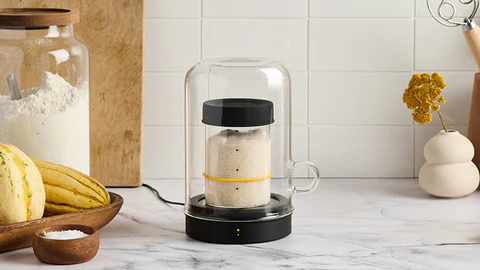
The Goldie by Sourhouse solves this problem simply. It’s a temperature-controlled container for your starter. Set your target temperature and it holds there, regardless of what’s happening in the rest of your kitchen. Winter, when your house drops to 65°F overnight? Your starter stays at 76°F. Summer heat wave? Same thing.
The result is a predictable starter. It rises on schedule. It peaks when you expect it to. You can actually plan to bake, rather than waiting to see if conditions align. If you’ve been fighting an inconsistent starter—or you’ve let one die because the maintenance felt like guesswork—The Goldie is worth a look.
The Bigger Picture
Keeping a sourdough starter is a small commitment that pays off in ways you don’t expect. Yes, you can make bread. But you can also make pancakes on a Tuesday, pizza on Friday, crackers for the weekend, and cinnamon rolls when you feel like impressing someone.
The discard isn’t waste—it’s possibility. Once you see it that way, the whole practice makes more sense.A healthy starter and a little creativity go a long way.
INFORMATION
Subscribe to D'Olivo via Email
Stay up to date! Sign up to receive D'Olivo emails
© D'Olivo
Accepted Forms of Payment